Pivot_Point
Pivot Point
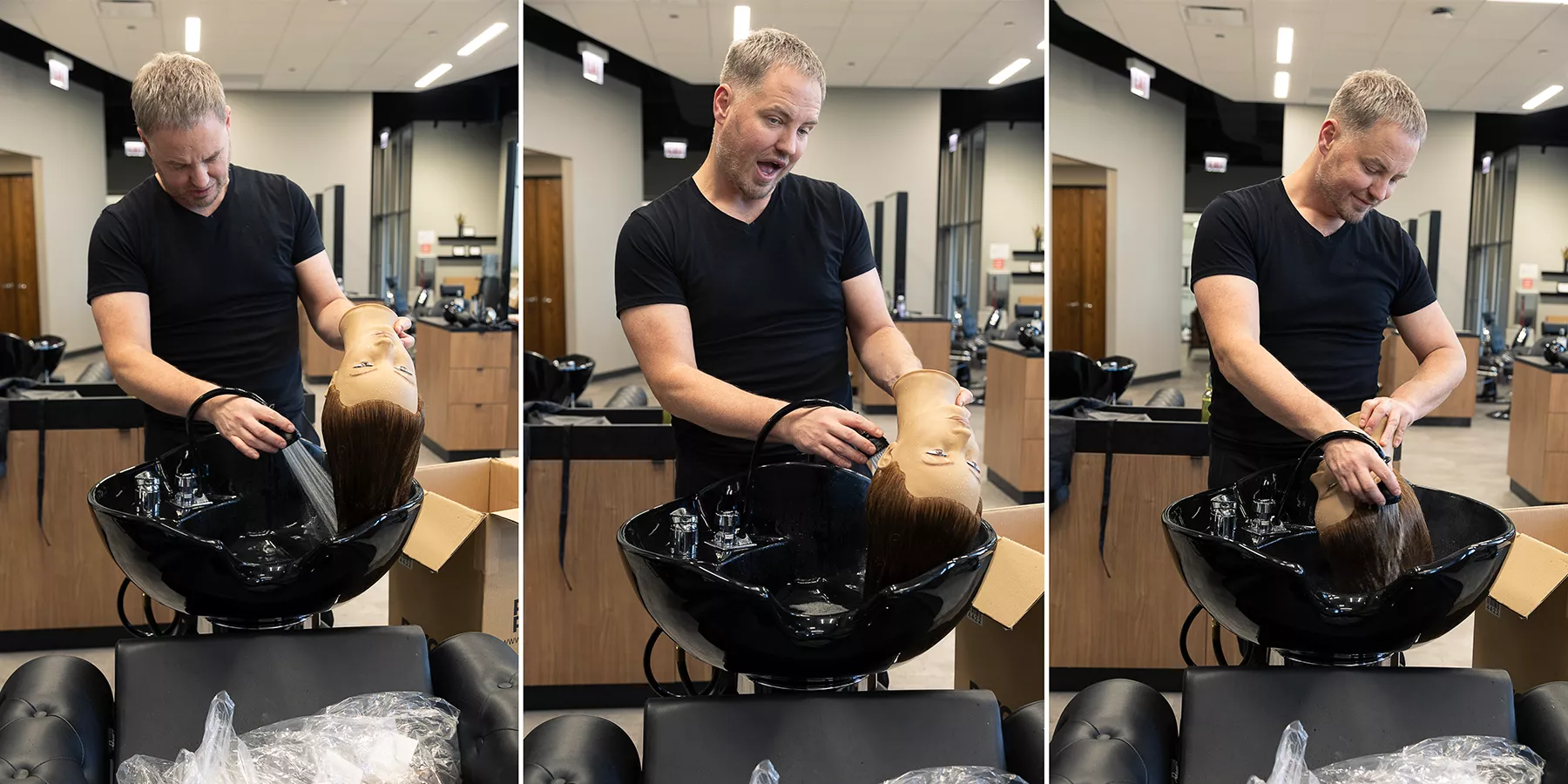
Mannequin 101: Essential Hair Care and Maintenance Tips for Styling, Coloring and Chemical Services on Mannequins
by Pivot Point Director of Product Experience, Jason Russell
SUMMARY: Your Pivot Point mannequin is an investment in your education, creativity and professional development—and proper care is key to maximizing its performance and longevity. In this installment of our Mannequin 101 series, discover expert tips and best practices for thermal styling, coloring, lightening, relaxing and perming. Learn which services are recommended, what to avoid and how to protect your mannequin from unnecessary damage while getting the most out of every practice session.
Welcome Back to the Mannequin 101 Series!
In our previous blog, Mannequin 101: How to Choose the Right Hair Mannequin, we shared helpful tips for selecting the mannequin that’s right for you.
Now that you’ve made the investment, let’s talk about the best ways to care for it!
With a few simple best practices, you can get maximum performance and longevity from your Pivot Point mannequin. Whether you’re preparing for a global competition or learning haircutting and styling for the first time, proper mannequin hair care and maintenance make all the difference.
We’ll cover thermal styling, coloring, lightening, relaxing and perming. But first, there’s one important thing to remember:
Your mannequin is tough—but it isn’t invincible.
Just like a client sitting in your chair, every mannequin has a unique hair type, texture and processing history. Certain services may be perfect for that hair, while others simply aren’t recommended. The same professional judgment you use behind the chair should also be used when working with your mannequin.
As a cosmetology educator for more than 20 years, I’ve seen students apply lightener with 40-volume developer, wrap it in foils, place the mannequin under heat and return an hour later to find the foils at the bottom of the dryer.
Along with the hair. 😉
Every stylist reading this just clutched their pearls.
The student’s first question was usually, “What’s wrong with this mannequin?”
Well…there could be two explanations.
Actually, there’s only one: misuse and a poor understanding of hair processing.
Just like with a client, knowing what the hair can—and cannot—handle is part of becoming a great stylist.
So, what services can you perform on your Pivot Point mannequin? What should you avoid? And which services should never be combined?
Let’s get into it!
Thermal Styling Hair Mannequins
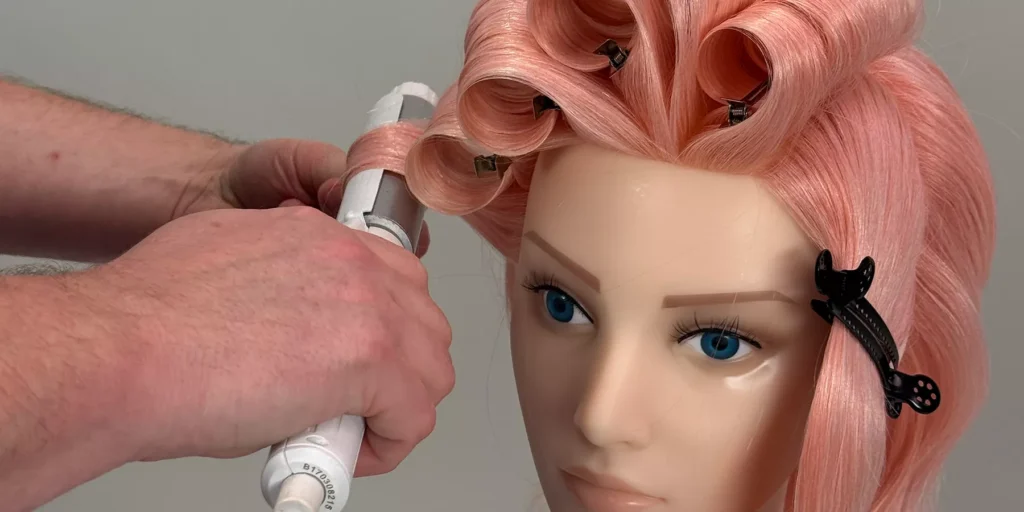
Pivot Point mannequins feature human hair, natural hair (animal hair), or a combination of the two. All can be successfully styled with heat when you follow a few important guidelines.
Best Practices for Thermal Styling Mannequin Hair
Maximum recommended temperature: 350°F. For mannequin hair, 350°F is the maximum recommended temperature for thermal styling, but the appropriate temperature may be lower depending on the hair’s condition and processing history.
However, just like working with clients, temperature should be adjusted based on the condition and processing history of the hair. When in doubt, start cool and work your way up!
Light and Ultra Light Mannequins: Just like a client who’s been previously lightened 7-10 levels, these mannequins may require less heat and a gentler touch.
After Chemical Services: Following lightening, coloring or relaxing, both the client’s hair and the mannequin’s hair may be in a more fragile state. Reducing your temperature is always a great practice.
Repeated Thermal Styling: Repeated thermal styling can affect any hair type. Just like naturally curly clients, repeatedly flat-ironing and blow-drying a curly mannequin can weaken its natural curl pattern over time.
Pivot Point curly mannequins contain 100% human hair, so that hair responds much like the naturally curly guests sitting in your chair.
Silk Pressing and Double-Process Blow-Drying: These services are not recommended. We’ve all seen naturally curly clients whose ends no longer curl and almost appear relaxed. Repeated high-temperature pressing and multiple applications of heat can create a similar result on mannequin hair.
For the longevity of your mannequin’s curl pattern and texture, avoid these services.
The Golden Rule of Thermal Styling
If it’s not recommended for your client’s hair, it’s probably not recommended for your mannequin’s hair.
Coloring Hair Mannequins
Here comes one of my favorite parts!
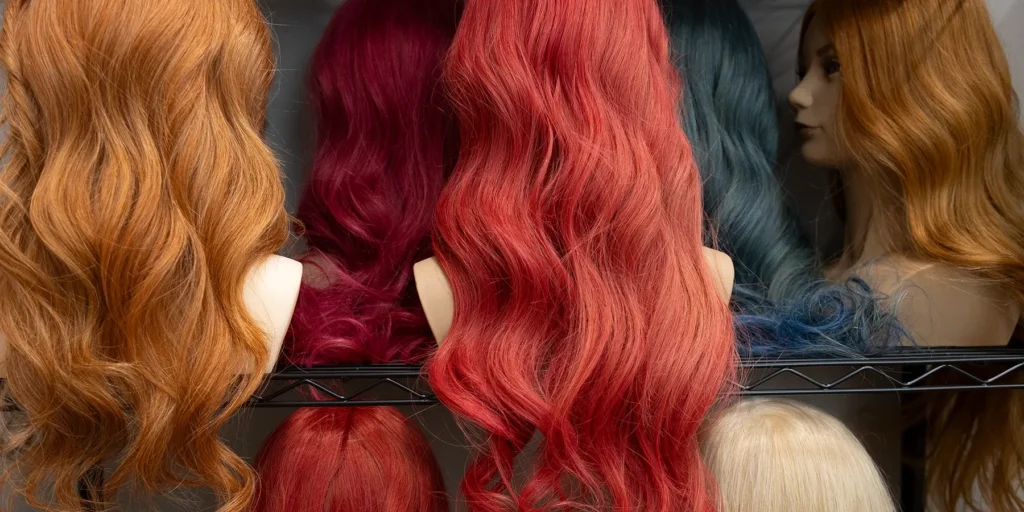
A Pivot Point mannequin can be an incredible canvas for color. I’ve colored thousands of mannequins throughout my career and learned quite a few dos and don’ts along the way.
And once again, many of the same principles we use with clients apply to mannequins.
Best Practices for Coloring Mannequin Hair
Always strand test first. You wouldn’t jump into an unpredictable chemical service on a client without considering the outcome first. Give your mannequin the same professional consideration.
Think deposit, not lift. Temporary, semi-permanent, demi-permanent and permanent color can all be used for depositing color. Using permanent color to create a lighter result on mannequin hair, however, may produce unpredictable results. If you need to go lighter, choose an appropriate lightening product.
Want vivid color? Start with a lighter mannequin. Why spend your time lightening a dark mannequin when we’ve already done the work for you? Our Light and Ultra Light mannequins feature levels 9 and 10 and make excellent blank canvases for vibrant, creative color.
Keep developer low. Permanent colors used for deposit should be mixed with low-volume developers—10 or 20 volume. Higher-volume developers designed for lifting are not recommended.
Just like with a client, there’s no reason to unnecessarily expose the hair to a stronger developer when lift isn’t your goal.
Protecting Your Mannequin During Hair Coloring
Stay off the scalp. Avoid placing permanent color directly on the mannequin’s scalp. Developer can cause the mannequin’s skin to swell and may contribute to hair loss, especially with prolonged exposure.
Skip the heat. Never apply heat while hair color is processing on a Pivot Point mannequin. Just because heat may speed things up doesn’t mean it’s better! It can increase the likelihood of hair loss.
Protect the skin. Just like you protect your client’s hairline and clothing during a color service, protect your mannequin’s face and skin. Mannequin skin stains easily, so use barrier cream or plastic wrap.
If color gets onto the skin, wipe it away immediately with water or a sanitizing wipe. The longer it processes on the skin, the greater the chance that staining will become permanent.
In short: when coloring a hair mannequin, strand test first, use a low-volume developer for deposit, keep color and developer off the skin, and never apply heat while the color is processing.
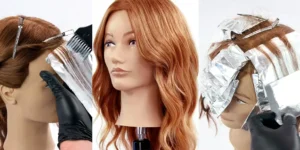
Lightening Hair Mannequins
Highlights. All-over bleach-and-tone. Balayage. Foils. Weaves. Slices.
As hairstylists, we perform these services every day. And there’s no better way to build confidence than practicing on a quality mannequin.
But just like with a client, you have to know your starting canvas.
Some Pivot Point mannequins are specifically designed for lightening practice. Others aren’t.
Best Practices for Lightening Mannequin Hair
Always strand test first. Just as you would with a client whose hair history may affect the result, test before committing to a full lightening service.
Know your starting level and processing history. Light and Ultra Light Pivot Point mannequins carry a disclaimer that further lightening is not recommended. Many have already been lifted significantly during manufacturing, 7-10 levels.
Approximately 90% of our mannequins begin with hair at levels 2–4, and most Pivot Point mannequins have been previously lightened to some degree. The exception is mannequins within our Dark categories.
Think about it the same way you would a client who has already undergone significant lightening: How much more can this hair reasonably handle?
Mixing lightener with high-volume developers is not recommended. Stick with a 10- or 20-volume developer.
Remember the Golden Rule of lightening mannequin hair—and client hair 😉—SLOW and LOW. Using a lower-volume developer for a longer period of time is a great general rule for maintaining the integrity of the hair.
Keep lightener off the mannequin’s skin. Direct scalp application may cause hair loss. Off-scalp lightening techniques are recommended for all mannequins.
Just like with a client, faster and stronger isn’t always better. Consider the hair’s starting level, condition and processing history, and give the lightener time to do its job without unnecessarily compromising the hair.
Natural hair mannequins should not be lightened.
Never add heat. Do not apply heat while lightener is processing on any Pivot Point mannequin.
Remember those foils at the bottom of the dryer?
We don’t want a sequel. 😉
For mannequin lightening, remember: know the starting level, consider the processing history, use 10- or 20-volume developer, keep lightener off the skin, and never add heat.
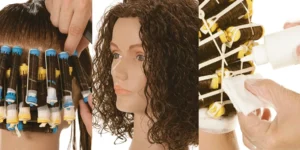
Relaxing & Perming Hair Mannequins
Taking curly hair straight or straight hair curly is part of everyday salon life. Choosing the right product, strength and processing time can make the difference between a great service and a not-so-great one.
That’s no different with a Pivot Point mannequin.
Relaxers are among the strongest chemicals we use in our industry and require precision. Just like with a client, you have to respect both the chemical and the condition of the hair.
Best Practices for Relaxing and Perming Mannequin Hair
Always strand test first.
Choose mild relaxers. Whether you choose a thio or hydroxide relaxer, GO MILD.
Remember: Pivot Point curly mannequins have not been chemically curled. Their curl patterns are created using high-pressure steam. There are no chemical curling products used to create the texture.
Choose acid waves. Acid waves are recommended for permanent waving. Alkaline waves are not.
Follow color-treated timing guidelines. Just as you would adjust your approach for a client with previously processed hair, process perms and relaxers according to the manufacturer’s directions for previously color-treated hair.
Avoid double-process keratin services. Treatments requiring multiple applications of high-temperature thermal pressing should be avoided. Just like with clients, combining chemical processing with repeated extreme heat can push the hair beyond its limits.
Choose the right mannequin. Permanent waves are recommended for Dark and Medium-Dark mannequins only. Medium-Light, Light and Ultra Light mannequins have already undergone significant lightening and are not recommended for perming.
Again, think like you would behind the chair: Would you perm a client whose hair had already been lifted six to ten levels?
Probably not.
Your mannequin deserves that same professional judgment.
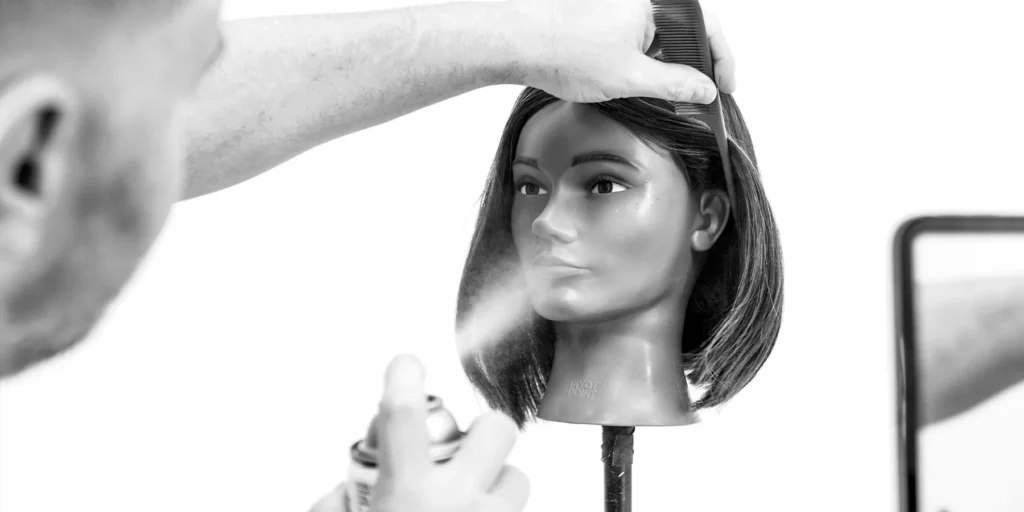
Mannequin Hair Care Made Simple
If you’re thinking, “Wow, that’s a lot of information…”
You’re right!
That’s why we’ve created additional resources to make caring for your mannequin easier.
Check out our Care and Maintenance video series for demonstrations of many of these best practices.
You can also visit any mannequin product page on our website and look for the PERFECT FOR section. This identifies the recommended services for that specific mannequin.
Here’s an easy rule to remember:
If a service isn’t listed under PERFECT FOR, it isn’t recommended for that mannequin.
When choosing a mannequin for a specific service, always check the PERFECT FOR section on the product page before beginning the service.
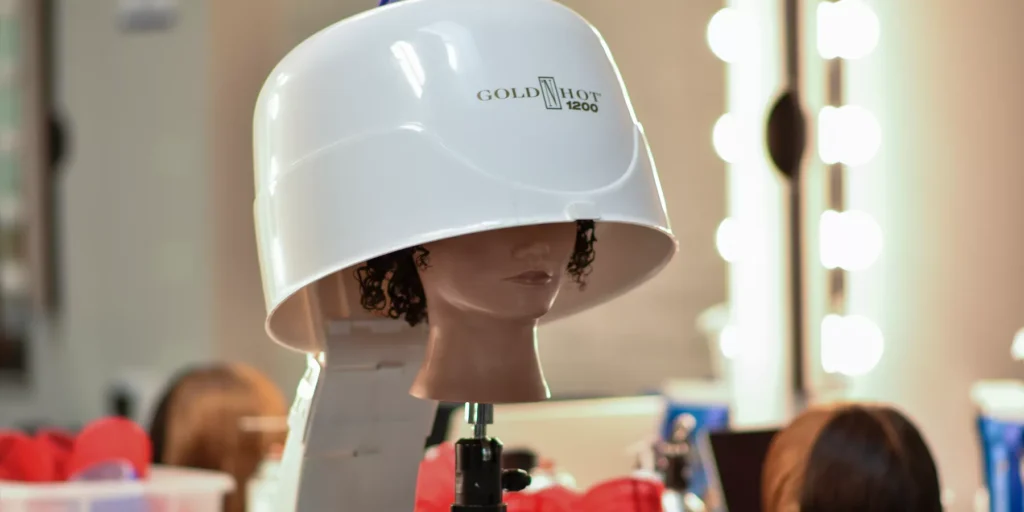
Treat Your Hair Mannequin Like Your Real Client
If there’s one thing I hope you take away from this blog, it’s this:
The same professional judgment you use with a client should follow you to your mannequin.
Consider the hair type, texture, and chemical history. Adjust your heat. Choose your developer carefully. Strand test. And don’t push the hair beyond what you know it can handle.
Your mannequin is there to help you learn, practice, experiment and become a better stylist. Treat it like the guest sitting in your chair, and you’ll get much more from your investment.
And when in doubt, remember:
For heat: Start cool and work your way up.
For lightening: SLOW and LOW.
Here’s to great hair, smarter practice and many successful services ahead.
Coming up next in our Mannequins 101 series, Blog 4: Mannequins in Action—An Artist’s Perspective will bring the artistry to life! Through inspiring before-and-after transformations, we’ll showcase how different mannequins are used to achieve specific looks, why each mannequin was selected, and how choosing the right mannequin can make all the difference in the final result. Happy styling!
Mannequins 101 Blogs

LEARN MORE ABOUT JASON RUSSELL
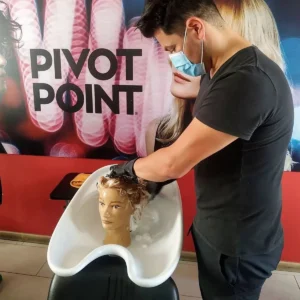
Frequently Asked Questions for Mannequin Hair Care & Maintenance
Get answers to common questions about caring for and maintaining your Pivot Point mannequins. From thermal styling and coloring to lightening and perming, these frequently asked questions provide helpful tips and best practices to protect mannequin hair, achieve optimal results and extend the life of your mannequins.
What is the maximum temperature for styling a hair mannequin?
The maximum recommended temperature for thermal styling a Pivot Point mannequin is 350°F. However, the appropriate temperature may be lower depending on the mannequin’s hair condition and processing history.
Can you color a hair mannequin?
Yes. Pivot Point mannequins can be used for a variety of coloring services. Always strand test first, use appropriate low-volume developer for deposit, protect the mannequin’s skin and never apply heat while the color is processing.
Can you lighten a hair mannequin?
Some Pivot Point mannequins are designed for lightening practice, while others are not recommended for further lightening. Always check the mannequin’s starting level, processing history and PERFECT FOR recommendations before beginning a lightening service.
What developer should you use when lightening a mannequin?
For Pivot Point mannequins, a 10- or 20-volume developer is recommended for lightening. High-volume developers are not recommended.
Can you perm a hair mannequin?
Permanent waves are recommended for Dark and Medium-Dark Pivot Point mannequins only. Medium-Light, Light and Ultra Light mannequins are not recommended for perming because they have already undergone significant lightening.
How do you make a hair mannequin last longer?
The best way to extend the life of a hair mannequin is to consider its hair type, texture and processing history before performing a service. Use appropriate temperatures and chemical products, strand test before chemical services, avoid unnecessary processing and always follow the mannequin’s PERFECT FOR recommendations.
Still need help?
Visit our full FAQ page, email us at info@pivot-point.com, or call 847-866-0500 during regular business hours (Mon–Fri, 8:30 a.m.–5:00 p.m. CT). You can also reach us through our Contact Us page. Our team is happy to help connect you with the right resources.

DOWNLOAD EDUCATIONAL HAIR PORTFOLIO
Are you interested in more newsworthy stories from Pivot Point? Click here to access all our online articles!

Pivot Point is the world’s most trusted name in beauty, barber, and wellness education. For nearly 65 years, we’ve helped aspiring professionals build confidence, develop skills, and create sustainable careers through industry-leading curriculum, hands-on tools, and effective digital learning experiences. Our mission is to elevate education, improve outcomes, and prepare learners for real-world success.
 Argentina
 Australia
 Austria
 Belgium
 Bolivia
 Brazil
 Bulgaria
 Canada - English
 Chile
 Colombia
 Costa Rica
 Denmark
 Dominican Republic
 Ecuador
 El Salvador
 Fiji
 Finland
 France
 Germany
 Ireland
 Italy
 Japan
 Luxembourg
 Mexico
 Netherlands
 New Zealand
 Norway
 Pakistan
 Panama
 Paraguay
 Peru
 Poland
 Portugal
 Puerto Rico
 South Africa
 South Korea
 Spain
 Sweden
 Switzerland
 Turkey
 United Kingdom
 United States
 Uruguay


